
Today's climbing centres are sophisticated facilities, supported by teams of people responsible for keeping their walls, equipment and operations safe.
From route setting and maintenance to inspections and technical management, many of these roles involve working at height on artificial climbing structures.
But being a confident climber doesn't automatically make someone competent to work safely at height.
Working above the climbing floor brings different risks, responsibilities and technical demands. Understanding how to access structures, select and use appropriate equipment, establish safe working systems and carry out a rescue if something goes wrong is essential.
Why specialist climbing wall training matters
The Work at Height Regulations 2005 require work at height to be properly planned, appropriately supervised and carried out by competent people, or those working under appropriate supervision. Part of the requirement for proper planning is the need for a rescue plan.

For climbing wall operators, this means ensuring that employees have the knowledge, skills and training appropriate to the tasks they undertake.
Climbing experience provides a valuable foundation, but workplace competence requires additional understanding of legislation, personal fall protection equipment, rigging systems, work positioning and rescue techniques.
Climbing wall staff are likely to be experienced climbers, maybe even qualified to lead others in recreational climbing activities. These staff may be familiar with climbing ropework, which is likely to be suitable for leadership or instruction in recreational climbing or caving activities, and this is accepted in law in the Work at Height Amendment Regulations 2007.
However, if they are working at height for other reasons, such as undertaking significant maintenance, checking, repair etc (e.g. route setting on a wall) then the systems used to keep them safe must meet the requirements of the Work at Height Regulations 2005 in full. To put this in a simple example, we probably cannot justify suspending ourselves off just one rope system and will require two.

Artificial Climbing Structures Work at Height Course
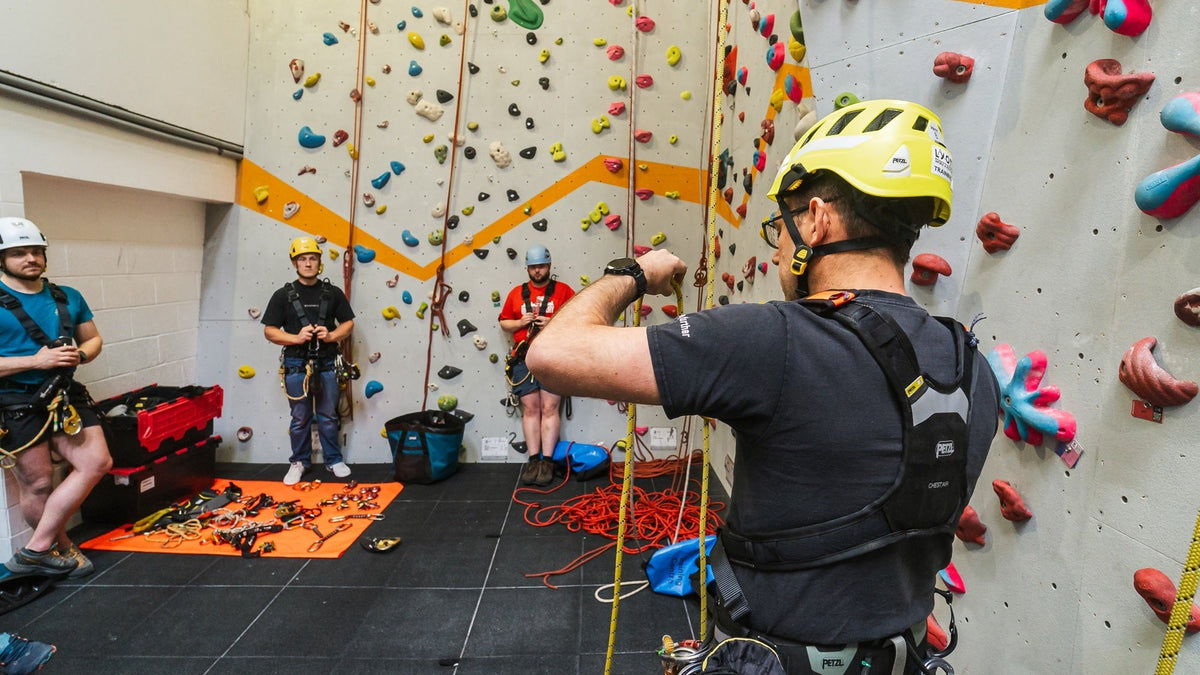
Lyon Work & Rescue's two-day Artificial Climbing Structures Work at Height Course has been developed specifically for people working on and around climbing walls and other artificial climbing structures.
The course combines theoretical and practical training, providing a foundation in safe access, work positioning, hauling and co-worker rescue, with techniques selected for the demands of artificial climbing environments.
The course covers:
- Legislation and safe working practices: Including the Work at Height Regulations 2005, Management of Health and Safety at Work Regulations 1999 and LOLER.
- Personal fall protection equipment: Equipment selection, fitting, adjustment and pre-use checks.
- Access and rigging: Initial access, knots, rigging working lines, and rope ascent and descent.
- Work positioning: Using work positioning lanyards and safely passing deviations.
- Hauling and load management: Lowering loads and using mechanical advantage systems.
- Co-worker rescue: Practical rescue techniques and considerations for incidents involving harness suspension.
The course includes a short-written test and continuous practical assessment by Lyon instructors. Successful candidates receive a certificate of attendance and assessment, valid for three years.

Who is the course for?
The training is designed for personnel required to work at height on artificial climbing structures, including:
- Climbing wall owners and managers.
- Route setters and climbing wall technicians.
- Maintenance and inspection personnel.
- Instructors and operational staff.
- Technical managers and advisors.
- Staff working in high ropes courses, activity centres, schools and leisure facilities.
Candidates must be aged 18 or over, medically fit and experienced climbing wall users, competent in belaying and top-rope climbing without supervision.
Practical training from Lyon Work & Rescue
With extensive experience in specialist work-at-height equipment and training, Lyon understands the importance of practical skills that translate directly into the workplace.
This course brings together that expertise in a programme developed around the specific requirements of artificial climbing structures, helping people build the knowledge and techniques to undertake work more safely and efficiently.
Course duration: 2 days
Current Venues: Redpoint Climbing Centre, Bristol and Lakeland Climbing Centre, Preston.
Alternative venues and in-house training arrangements can be discussed.
Book your climbing wall work-at-height training
Whether you're responsible for route setting, maintenance, inspections or managing a climbing facility, developing work-at-height competence is an important part of providing a safe working environment.
Find out more about the course, check availability and book your place with Lyon Work & Rescue.
Share: